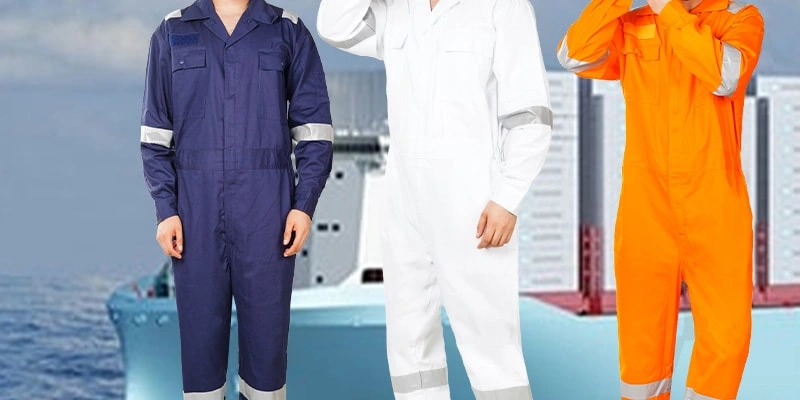
The natural, eco-friendly fabrics commonly used for workwear are primarily divided into two categories: plant-based fibers (such as cotton, linen, and bamboo) and animal-based fibers (such as wool, silk, and down). Among these, plant-based fibers are best suited for maritime work environments due to their high practicality, while animal-based fibers, limited by their properties, are used only as supplementary insulation layers. Given the specific requirements of maritime operations, the natural and eco-friendly properties of all-cotton fabrics make them the top choice for crew uniforms.
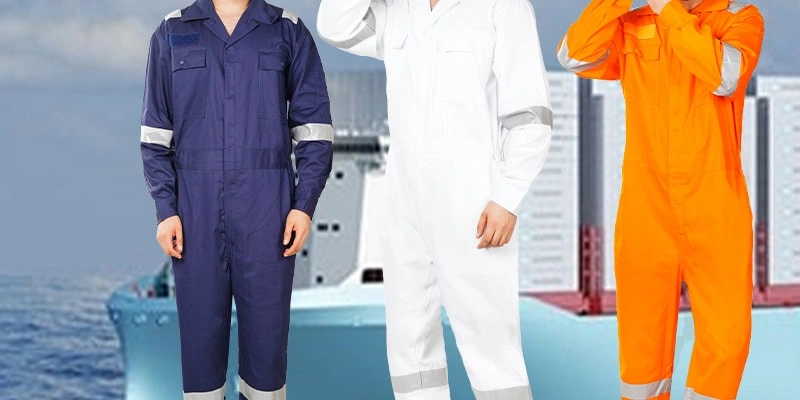
I. Key Advantages of All-Cotton Coveralls:
1. Exceptional moisture-wicking and breathability: Pure cotton fibers have a natural hollow structure that quickly absorbs sweat from the skin’s surface and releases it into the air, reducing fatigue caused by excessive sweating. Their breathability far surpasses that of polyester-cotton blends or pure synthetic fabrics, effectively minimizing issues like stuffiness and clinginess.
2. Skin-friendly and non-irritating, with no chafing even during prolonged wear. Natural cotton fibers are soft and fine, lacking the chemical coatings or stiffness of synthetic fibers. Since crew members must bend, climb, and wear uniforms for extended periods, 100% cotton prevents redness and abrasions caused by fabric friction on the neck, armpits, and waist, making it suitable for the high-frequency, long-duration wear demands of shipboard operations.
3. Heat-resistant and non-melting, preventing secondary burns caused by synthetic fibers melting and sticking to the skin. Although it lacks professional flame-retardant properties, it offers basic safety protection compared to synthetic fabrics.
4. Durable and easy to care for: 100% cotton fabric withstands alkaline washing and requires no complex ironing after washing (as ships lack professional ironing equipment); simply air-drying restores its basic shape.
5. Cotton fibers absorb moisture from the air, forming an extremely thin water film on the fiber surface. This film significantly reduces surface resistance, allowing static charges generated by friction to dissipate quickly. Unlike synthetic fabrics, it does not attract dust or cling to the body due to static electricity, making it more comfortable to wear.
6. Weak UV protection; prone to sunburn during outdoor deck work. The UV protection factor (UPF) of pure cotton fabrics is typically <15, which is far below the recommended standard. When working outdoors on the deck in tropical waters, it provides only basic physical coverage and cannot effectively block UV rays, making the skin prone to sunburn.
II. Precautions for Using All-Cotton Coveralls
1. Choose pre-shrunk styles: When purchasing, confirm that the fabric has undergone pre-shrinking to prevent shrinkage and deformation after washing, which could affect fit and performance;
2. Select medium-to-heavyweight options (240–270 g/m²): Marine operations require basic abrasion resistance; medium-to-heavyweight fabrics balance breathability and durability, extending the garment’s lifespan;
3. Avoid use in high-risk operations: Strictly prohibited for use on hazardous material vessels, emergency rescue operations, and similar scenarios. If work in special environments is necessary, it is recommended to layer the coveralls with garments featuring anti-static and flame-retardant properties;
4. After washing, immediately hang to dry in a well-ventilated area on the vessel. Avoid stacking damp coveralls. If mold appears, wash promptly with a neutral detergent to prevent mold residue;
5. When working on deck in tropical waters, choose professional UV-resistant all-cotton coveralls (UPF 50+) and pair them with sun-protective arm sleeves and a sun hat to compensate for their limited UV protection and prevent sunburn.









No. 368, West Huanghe Road, Huangdao District, Qingdao City, Liandong U Valley No. 12
Copyright © 2026 by Qingdao CHUANQI Escort Technology Co., Ltd. All Rights Reserved